
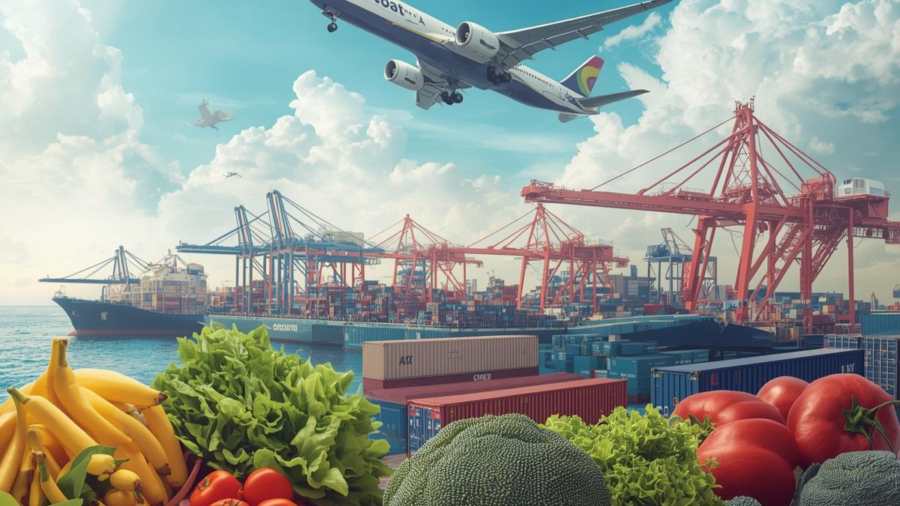
Expanding into international markets is an exciting opportunity for agricultural producers and exporters, but success depends heavily on choosing the right markets. Not every market is suitable for every product, and entering the wrong market can drain resources without delivering returns. This guide will help you identify and evaluate potential export markets for your agricultural products strategically.
Understanding Market Selection: Why It Matters
Market selection is one of the most critical decisions in export planning. The right market offers strong demand for your products, manageable entry barriers, favorable pricing, and sustainable long-term growth potential. Conversely, poor market selection leads to wasted resources, frustrated relationships, and missed opportunities elsewhere.
Key Factors to Consider When Evaluating Export Markets
1. Market Demand and Consumption Patterns
Start by researching which countries consume your type of products and in what quantities. Look at import statistics, consumption trends, and market growth rates. For example, if you export quinoa, countries with growing health-conscious populations and interest in superfoods would be prime targets.
Questions to Ask:
- Is demand for this product growing, stable, or declining in the target market?
- What is the current import volume and value?
- Are there seasonal demand patterns I should know about?
- What consumer preferences or trends are driving demand?
2. Competitive Landscape
Understand who your competitors are in the target market. Are there established suppliers from other countries? What are their strengths and weaknesses? Can you compete on price, quality, or unique product characteristics?
China, Thailand, and Vietnam might dominate rice exports to certain markets, but there may be niches for specialty varieties, organic rice, or specific quality grades that aren’t well-served by major exporters.
3. Market Access and Trade Barriers
Evaluate the regulatory environment and trade barriers in potential markets:
Tariff Barriers: Import duties can significantly affect your competitiveness. Check if your country has free trade agreements with the target market that offer preferential tariffs.
Non-Tariff Barriers: These include quality standards, packaging requirements, labeling regulations, and certification requirements. Some markets have very stringent standards that may be difficult or expensive to meet.
Import Restrictions: Some countries have quotas, import bans on certain products, or seasonal restrictions. Research these thoroughly before committing resources.
4. Payment and Currency Risks
Consider the payment methods common in the target market and currency stability. Markets with unstable currencies or political uncertainty pose higher financial risks. Assess whether buyers in these markets are willing to use secure payment methods like Letters of Credit.
5. Logistics and Infrastructure
Evaluate the practical aspects of shipping to the target market:
- Distance and shipping costs
- Quality of port infrastructure
- Cold chain facilities (crucial for perishables)
- Average transit times
- Reliability of logistics services
For agricultural products, especially perishables, efficient logistics can make or break your success.
6. Cultural and Consumer Preferences
Understanding local food culture is essential. For example, certain fruits popular in Asian markets might be unknown in European markets, or vice versa. Religious considerations (Halal requirements in Muslim-majority countries) and local taste preferences can also influence market selection.
Proven Strategies for Market Research
Start with Trade Statistics
Resources like UN Comtrade, national trade statistics, and agricultural department reports provide valuable data on import volumes, values, and trends. This data helps you identify which countries are actively importing products similar to yours.
Leverage Trade Associations and Government Support
Most countries have export promotion agencies that provide market intelligence, conduct buyer-seller meetings, and organize trade missions. Industry associations often publish market reports and facilitate networking with potential buyers.
Attend International Trade Fairs
Trade shows specific to agricultural products and food items are excellent for understanding market dynamics, meeting buyers, and observing competitor offerings. Events like Anuga (Germany), SIAL (France), and Gulfood (Dubai) attract international buyers and provide market insights.
Conduct Test Marketing
Before committing fully to a new market, consider sending small trial shipments. This helps you understand actual demand, identify logistical challenges, and build relationships with potential distributors without major investment.
Prioritizing Markets: A Practical Framework
Given limited resources, most exporters need to prioritize markets. Here’s a simple framework:
Tier 1 Markets (Immediate Focus):
- Strong current demand
- Low to moderate entry barriers
- Manageable logistics
- Available buyer contacts or established trade relationships
- Favorable trade agreements or low tariffs
Tier 2 Markets (Medium-term Development):
- Growing demand but perhaps more competitive
- Moderate entry barriers requiring some additional investment (certifications, packaging changes)
- Good long-term potential
Tier 3 Markets (Future Opportunities):
- Emerging demand
- Higher entry barriers or uncertain conditions
- Require significant investment or market development
- Monitor for future entry
Regional Market Insights for Agricultural Exports
Middle East and North Africa
These regions are major food importers with limited domestic agricultural production. They offer strong demand for grains, pulses, spices, fruits, and vegetables. Halal certification is often required. Political stability varies by country, so payment security is important.
European Union
High-value market with stringent quality and safety standards. Strong demand for organic and sustainably-sourced products. Certification requirements can be demanding, but premium pricing is possible. Trade agreements may offer preferential access.
Southeast Asia
Rapidly growing middle class driving demand for diverse food products. Competitive markets but with niches for specialty and quality products. Good regional logistics infrastructure. Cultural sensitivity to local taste preferences is important.
East Asia (China, Japan, South Korea)
Large, sophisticated markets with high standards. Japanese and South Korean markets offer premium pricing for quality products. China offers massive scale but can be complex to navigate. Strong preference for products with quality certifications.
North America
Mature market with specific regulatory requirements (FDA for USA, CFIA for Canada). Organic and specialty products perform well. Competition is strong, but market size offers opportunities for multiple suppliers.
Red Flags: When to Reconsider a Market
- Consistent payment defaults or disputes reported by other exporters
- Unstable political situation affecting trade continuity
- Prohibitive certification costs relative to market size
- No clear path to competitive pricing
- History of arbitrary regulatory changes affecting imports
- Lack of reliable buyers or distribution channels
Working with the Right Partner Makes the Difference
Successful market entry often depends on having the right local knowledge and connections. This is where experienced export-import companies add tremendous value.
At AD Overseas, we’ve developed strong relationships in multiple markets and understand the nuances of entering each. We help suppliers identify the most promising markets for their specific products, navigate regulatory requirements, connect with reliable buyers, and manage the entire export process. Our market intelligence and buyer network can save you years of trial and error.
Taking Action: Your Market Selection Checklist
Before committing to a new market:
- Complete demand and competition analysis
- Calculate realistic pricing including all costs
- Verify regulatory requirements and certification needs
- Identify 3-5 potential buyers or distributors
- Assess payment security options
- Calculate logistics costs and transit times
- Review any political or economic risk factors
- Create a realistic timeline for market entry
Conclusion
Choosing the right export markets is both an art and a science. It requires thorough research, realistic assessment of your capabilities, and often, guidance from those who know the international trade landscape. Start with markets that align best with your products and resources, then expand methodically as you gain experience and confidence.
The global marketplace offers abundant opportunities for agricultural exporters. With careful market selection and the right partnerships, your products can find appreciative buyers worldwide, building a sustainable and profitable export business.
Ready to explore international markets for your agricultural products? AD Overseas provides market intelligence, buyer connections, and complete export support. Let’s identify the right markets for your business.